The post Tips for Visiting the Prosecco Vending Machine in Italy appeared first on The Blonde Abroad.
from The Blonde Abroad https://ift.tt/2Owsqm9

The post Tips for Visiting the Prosecco Vending Machine in Italy appeared first on The Blonde Abroad.
The post The Best Party Cities Around the World appeared first on The Blonde Abroad.
The post The Best Time to Travel to Cambodia appeared first on The Blonde Abroad.
The post Ethical Animal Encounters Around the World (and How to Find Them) appeared first on The Blonde Abroad.
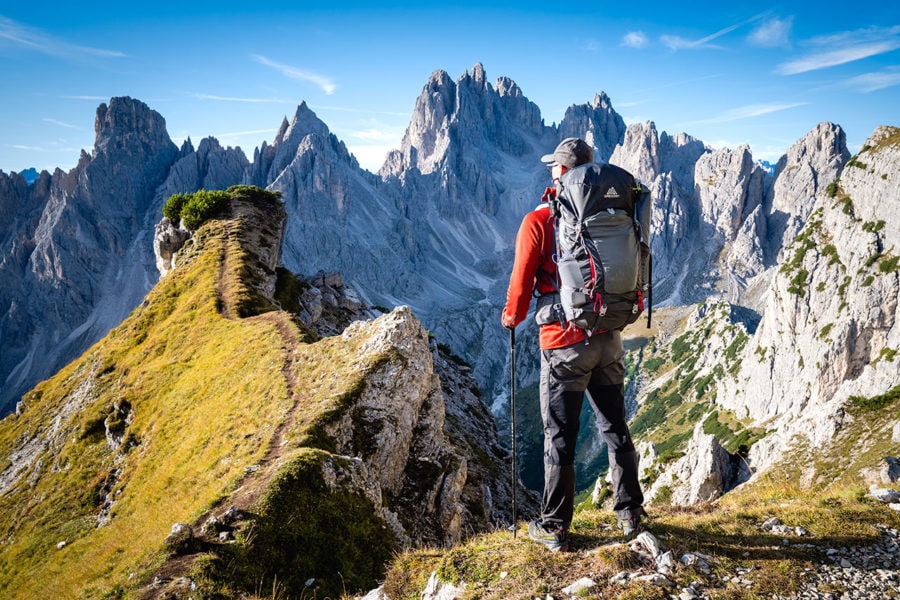
Learn how to pack for a successful overnight backpacking or trekking adventure with lightweight gear essentials like a tent, stove, clothing, and more. My ultimate backpacking checklist!
As you’re about to see with my ultimate backpacking checklist here — I’m a total gear nerd!
From backpacking in Greenland, trekking in Afghanistan, or hill-walking in Ireland, I’m always searching for the lightest and most comfortable hiking & camping equipment. Updating my gear guides on a regular basis.
Fortunately, you get to benefit from my expensive hobby of collecting and testing outdoor backpacking gear by learning from my experiences using it during adventures around the world.
At the end of this guide, you’ll find a FREE printable backpacking checklist that you can download and use for free!
Experience! I’ve been backpacking & trekking around the world for the past 9 years through mountains, deserts, forests, jungles and National Parks in multiple countries. This guide is also completely independent.
First off, I want to define the difference between backpacking, trekking, and hiking. These words are sometimes used interchangeably — but they can also have different meanings depending on who you ask.
Backpacking is a hiking trip that includes overnight camping. Packing everything you need to be self-sufficient in the wilderness on your back. Like my 10-day solo backpacking trip on Greenland’s Arctic Circle Trail.
Trekking is hiking long-distance, for days or weeks at a time. You might pack everything in yourself, but more likely you’ll have a guide and pack animal or human porter to help you. You may or may not need to bring your own shelter. Like my trek in the mountains of Afghanistan with a local guide & pack horse.
Hiking is just walking on a wilderness trail through the mountains, forest, desert, or even the countryside. Generally, this is used to define day hikes that don’t require an overnight stay. Like my day hike up Ireland’s highest mountain.
I’m going to focus on a typical 2-5 day backpacking trip, packing in your own food, water, and camping gear. But much of this will also work as a trekking packing list.
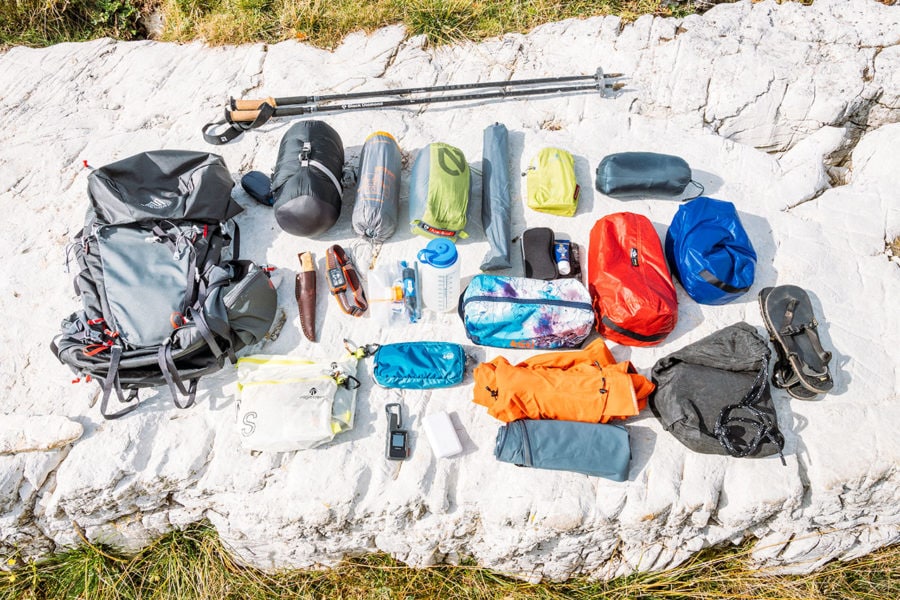
Backpacking checklists & packing lists can be a controversial subject. Everyone has an opinion about what’s the best hiking and camping gear to bring on a trip!
You have your traditional backpackers, lightweight backpackers, and even ultra light thru-hikers who all do things differently.
For this backpacking gear checklist, I’m sharing my personal setup, which is considered “lightweight” with a 20 lbs (9 kg) base-weight.
Backpack base-weight is the weight of all your gear except for food, water, and fuel — which varies depending on the length & location of your trip.
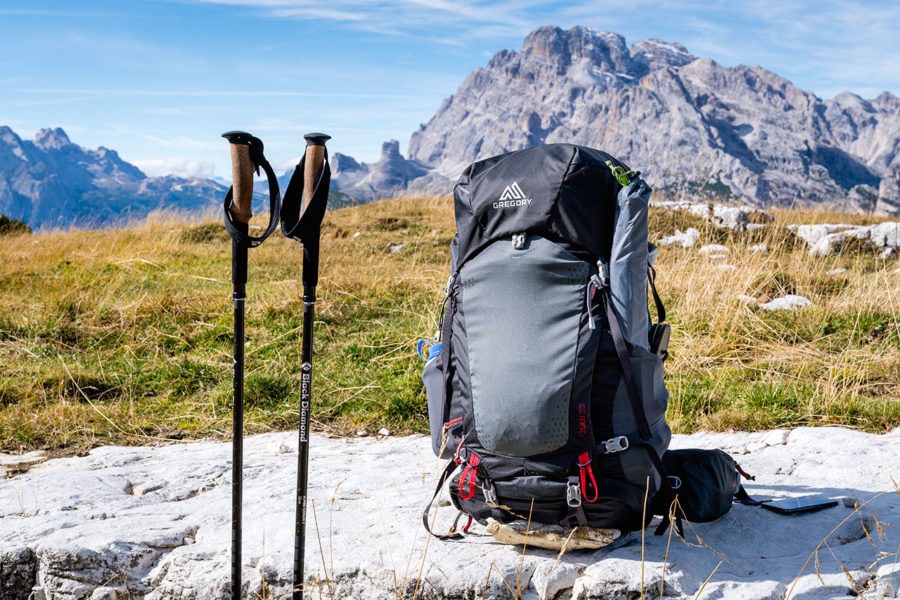
For multi-day hiking & backpacking, where you’ll need to carry everything in on your back, I recommend choosing a 40-65 liter backpack that will hold your tent, sleeping bag, food, water, and other backpacking essentials.
You may or may not want a day pack — it depends on the type of trip. Other than a traditional day-hike that doesn’t require camping, you might also want a day pack to wear during a guided trek, for easy access to certain items while the rest of your gear is with a porter or pack animal.
I do not bring a day pack on independent overnight hiking & camping trips.
What if it rains during your backpacking trip? Most hikers bring a waterproof rain cover for their backpack, and I used to as well. Until I discovered the magic of using a trash compactor bag (or two) to line the INSIDE of my pack.
Why? First of all, they are much cheaper. Second, they are multi-use items. Finally, they are much more effective. Sure, the outside of your backpack will still get wet, but everything inside will be bone-dry. Even if you fall into a river.
To keep your backpack organized during your hiking adventure, I recommend using a few lightweight stuff sacks and/or packing cubes, in different colors, so it’s easy to grab important gear quickly.
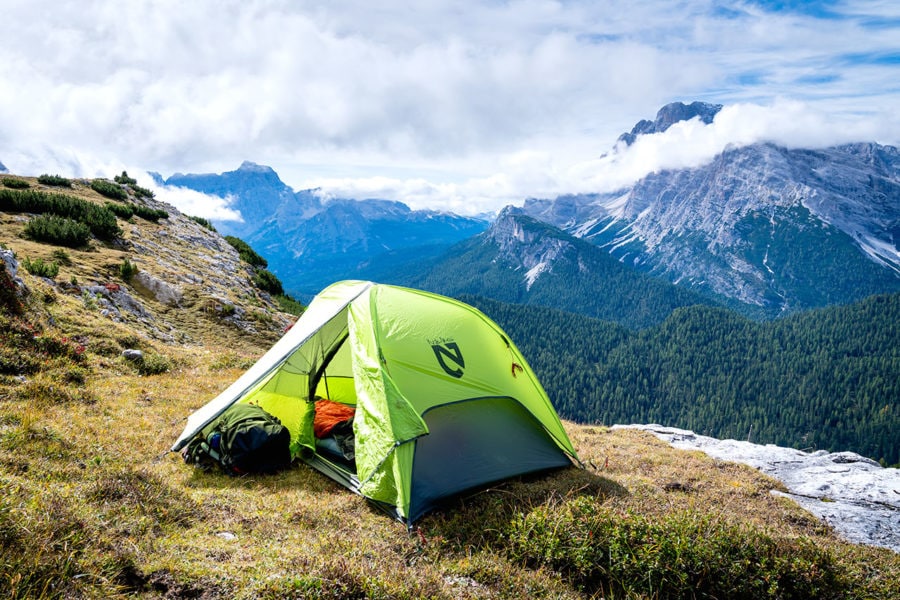
If you plan to sleep outside in the wilderness, you’re going to need a quality shelter to pack with you. Traditionally this would mean using a tent, but a camping hammock or bivy bag are other possible options. While I own and use all three types of shelters, generally I think most people should start with a tent.
This is one of your most important pieces of backpacking gear. You want to find a tent that is a good combination of lightweight, spacious, waterproof, and easy to set up. It’s basically where you’ll be living during your trip!
BUDGET OPTION: REI Quarter Dome 2 Tent
If you’re going to be camping in a forest or jungle, it might make sense to hang a hammock for your backpacking shelter. A camping hammock keeps you off the ground, away from bugs & wet conditions, but is also easy to pack with no aluminum poles. Some people prefer sleeping in them to tents also.
Bivy sacks are not for everyone. Basically, it’s like sleeping in a waterproof bag. The reason some experienced backpackers prefer them is due to their extreme light weight. It’s for minimalists & ultra-light hikers.
For a good night’s sleep, you need a warm sleeping bag. They key is to pick a bag rated warm enough for the weather you’ll encounter on your backpacking trip. I own two sleeping bags (30F & 0F), but if you can only get one, I’d probably recommend something around 15F degrees.
Down sleeping bags are warmer with less weight, but also more expensive. Synthetic bags weigh a bit more, but are more affordable.
BUDGET OPTION: Marmot Trestles 15F Synthetic
Sleeping pads have come a long way over the years. From bulky rolled pieces of foam, to lightweight inflatable versions with high-tech baffles that take up far less room in your pack. A good sleeping pad can make a huge difference in how much you enjoy camping outside.
You don’t need to lug a ton of pots & pans into the wilderness anymore. A lightweight backpacker kitchen allows you to boil water for cooking simple dehydrated meals on the go.
MSR WindBurner Backpacking Stove – After years of using a JetBoil, I made the switch to MSR’s new system due to better cooking in windy conditions and faster boil times.
GSI Infinity Mug – While I could technically use the thin “cup” included with my MSR Windburner stove, I prefer a proper insulated mug that keeps coffee warm longer, with a spill-proof cap.
GSI Essential Spoon – Awesome long-handled camping spoon that can reach deep into a dehydrated food bag.
Arcteryx Ether Crew – Lightweight, breathable, synthetic t-shirt. I wear one, and pack a spare. They weigh nothing.
Smartwool Merino 150 Top & Smartwool Merino 150 Pants – I always bring one pair of thermals to sleep in, or wear under my clothes in cold weather.
Arcteryx Konseal Hoody – Lightweight fleece pullover for when the temperature starts to drop.
Arcteryx Cerium LT Hoody – Lightweight, packable down jacket with a hood. For extra cold conditions, or under a waterproof shell jacket.
BUDGET OPTION: Mountain Hardwear Ghost Jacket
I generally pack 3 pairs of socks on my backpacking trips. Two pairs to alternate for hiking (so my feet are always dry) and some thick wool socks for sleeping. One spare set of underwear.
Darn Tough Socks – My favorite brand of hiking socks. As the name implies, they last a long time!
SAXX Boxer Briefs – Expensive, but sooooo comfortable. Quick drying very breathable. I also use them for travel.
These are the outer layers that protect you from nature’s wrath — the wind, rain, and snow. You should always pack some sort of rain gear on any backpacking adventure.
Arc’teryx Zeta SL Jacket – Super lightweight waterproof and packable rain shell for hiking.
BUDGET OPTION: Mountain Hardwear Ozonic Jacket
Arc’teryx Zeta SL Pant – Super lightweight waterproof and packable rain pants for hiking.
BUDGET OPTION: Mountain Hardwear Ozonic Pants
Obviously this is going to depend on the season, but I usually bring something to keep my head and hands warm just in case the weather turns bad, or it’s colder than expected at night.
Smartwool Sport 150 Hat – Lightweight merino-wool hat to help keep my ears and head warm when it gets cold or windy.
Arc’teryx Rivet Gloves – Thin but wind-resistant gloves that are comfortable for accessing the controls on my camera.
There is an ongoing discussion in the backpacking world about the benefits of using hiking shoes over heavy hiking boots. I own a pair of each, and use them for different situations.
Here’s the deal. I’m not a backpacker gormet cook like some people are. Food is just fuel to me. So I keep my diet simple and fast to prepare.
Usually bags of trail mix (nutes, dired fruit, etc) and some energy bars. I prefer Lara Bars and Clif Protein Bars. These act as both snacks and my lunch. Maybe some Sour Patch Kids or chocolate as an extra treat.
Good-To-Go Backpacker Meals – Tasty dehydrated bags of food that just need some hot water to prepare. You can eat right out of the bag too!
Quaker Protein Oatmeal – Instant oatmeal packets with some extra protein in different flavors. I usually add some dried berries too.
Starbucks Via Instant Coffee – I’ll be the first to tell you I’m not a big Starbucks fan in person. But their instant coffee packets are pretty damn good.
Ursack Major Bear Bag – Easier to pack than a hard-sided container, this Kevlar bag keeps bears and rodents out of your food.
Wilderness Wash – Biodegradable soap that’s safe for the environment.
Quick-Dry Towel –
Bamboo Toothbrush – Cut it in half for a travel-sized (and environmentally friendly) version.
Ok, this isn’t a backpacking essential. But a simple shaving kit is part of my own personal hygiene routine. So I thought I’d include it for entertainment value!
I pack a razor, small tube of environmentally friendly shaving cream, and a camp mirror. Generally shaving my head and face every 2-3 days during a trip.
Everybody poops. But there’s a particular way to poop in the backcountry that minimizes your impact on nature in the spirit of Leave No Trace principles.
These are the 10 most essential items to take with you on any backpacking adventure. From long-distance trekking to simple day hikes. They will help you survive in the wilderness during normal conditions or in an emergency situation.
Getting lost in the wilderness can turn dangerous quickly. Knowing where you are, and where you need to go, is an essential part of safe backpacking.
Always pack a light to find your way back down the trail after an epic summit sunset! Or overnight camping trips. Plus a set of spare batteries.
Many people underestimate the power of the sun, and a bad sunburn or sun-blindness can quickly ruin a great trip. I always pack a combination of wilderness-friendly sunscreen, sunglasses, a hat, and a lightweight Buff.
Some kind of first aid kit is a must on any outdoor adventure. You can buy a pre-made one like the one below, or create your own custom kit, which is what I do.
Adventure Medical Kits 7 – Covers all the basics. Bandages, pills, tweezers, blister care, etc.
Hydrate, hydrate, hydrate! Always research how much water you need to bring on a hike to stay properly hydrated, and bring a water purification system too. There are many ways to do this, my setup for long-distance hiking is:
A key piece of survival equipment for hiking & backpacking trips. My favorite wilderness knife is the Enzo Trapper, but you’ll also get along fine with something less fancy like a Swiss Army pocket knife.
To help you cook food, boil water, and stay warm in an emergency situation. You don’t need to go crazy. I usually bring a pair of Bic Lighters, some cottonballs in a tiny ziplock bag for tinder, and a few water/wind-proof matches.
If you’re on an overnight backpacking trip, you’ll already have a tent as I mentioned earlier. But I also recommend bringing an emergency shelter (tent blows away, burns down, etc). It’s also wise to pack a shelter on long day hikes, in case you get injured or lost and need to spend the night.
SOL Emergency Bivy Bag – This heat reflective and breathable bivy bag will keep you warm in an emergency.
Always bring at least an extra half-day’s worth of food with you on day hikes, and a full extra day’s worth of food on longer multi-day backpacking trips for unexpected situations.
Pack a few warm layers (thermal underwear, extra socks, hat, gloves, etc.) to help you stay warm & dry if the weather turns bad, you fall into a river, or have to spend an unexpected night in the wilderness.
While you could pack ultra-light and reduce all unnecessary luxuries from your backpacking gear checklist, sometimes a little extra weight is worth the comfort. Here are my personal favorite hiking & camping extras!
Ok, what about hiking with camera gear? I could probably write a whole article about this subject too. For a photography-heavy day hike, I usually bring my LowePro Whistler 350 Camera Backpack.
On longer multi-day backpacking or trekking adventures, I tend to bring much less gear, and attach a simple LowePro Toploader Pro Bag to the front of my shoulder straps.
I might also use a Peak Design Camera Clip and a Peak Design Rain Cover, if I want to travel super light in reguards to camera equipment.
You can check out all my photography equipment here.
If you’d like a simple, one-page backpacking checklist that you can print out to help plan future trips, Click Here To Download. Enjoy!
I hope you enjoyed my backpacking checklist & gear guide! Hopefully you found it useful. Here are a few more wanderlust-inducing articles that I recommend you read next:
Have any questions about backpacking gear or packing for a trek? Any other suggestions? Let me know in the comments below!
This is a post from The Expert Vagabond adventure blog.
The post Tips for Traveling with Life-Threatening Allergies appeared first on The Blonde Abroad.
The post The Ultimate Guide to Coffee Culture Around the World appeared first on The Blonde Abroad.
